
TECH NECK
If you've ever finished a day at your desk, looked up from your phone, or stepped away from a laptop and noticed a stiff neck, tight shoulders, or a headache creeping in, you're not alone.
Many people have heard the term "tech neck" used to describe the aches and pains associated with spending long periods looking down at phones, tablets, and computers.
But despite the name, technology itself isn't usually the problem.
Think of your body like it's designed for variety. Your muscles, joints, and nervous system thrive when they experience different positions throughout the day. The challenge comes when we spend hours at a time in the same posture, whether that's looking down at a phone, sitting at a computer, driving a truck, or even reading a book.
What Is Tech Neck?
Tech neck generally refers to neck, upper back, and shoulder discomfort associated with prolonged screen use.
Common symptoms may include:
Neck stiffness
Tight shoulders and upper traps
Headaches
Reduced neck movement
Upper back tension
Fatigue around the shoulder blades
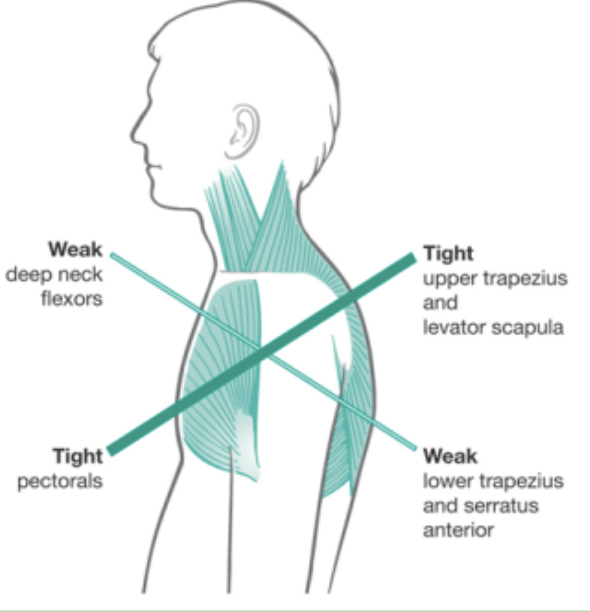
While posture can contribute, research suggests that the amount of time spent in one position may be more important than the position itself.
Your Head Isn't Too Heavy
You may have heard claims that looking down at your phone places enormous amounts of weight through your neck.
While it's true that different neck positions change the forces experienced by tissues, our bodies are remarkably adaptable and designed to tolerate a wide range of movements and positions.
The issue isn't that you're damaging your neck every time you look down.
It's that many of us stay there for hours without giving our bodies a chance to move somewhere else.
Movement Matters More Than Perfect Posture
There is no single "perfect" posture that works all day long.
Instead of chasing perfect alignment, it can be helpful to think about creating movement opportunities throughout your day.
Simple strategies include:
Alternating between sitting and standing
Taking short movement breaks every 30–60 minutes
Changing workstations throughout the day
Looking up from your phone regularly
Stretching or moving your neck through comfortable ranges of motion
Going for a short walk between tasks
The best posture is often the next posture.
Tips For Different Lifestyles
Desk Workers
Raise your monitor to eye level where possible and keep frequently used items within easy reach.
Tradies
Try to alternate tasks when possible and take brief movement breaks between jobs that require prolonged bending or overhead work.
Hairdressers & Beauty Therapists
Consider adjusting client and chair heights where practical to reduce prolonged forward bending.
Drivers
On long trips, use rest stops as opportunities to stand, walk, and gently move your neck and shoulders.
The Takeaway
Technology isn't ruining your posture, and your neck isn't fragile.
Your body is built for movement, adaptation, and resilience.
Rather than aiming for perfect posture, consider looking for more opportunities to change positions, move regularly, and give your body the variety it enjoys.
Your neck will likely thank you for it.
Feeling stiff after long days at a desk or on your phone?
A chiropractic assessment can help identify contributing factors and provide personalised strategies to keep you moving comfortably.
Much love,
The Conscious Chiro Team x